1) Scholarly Argument
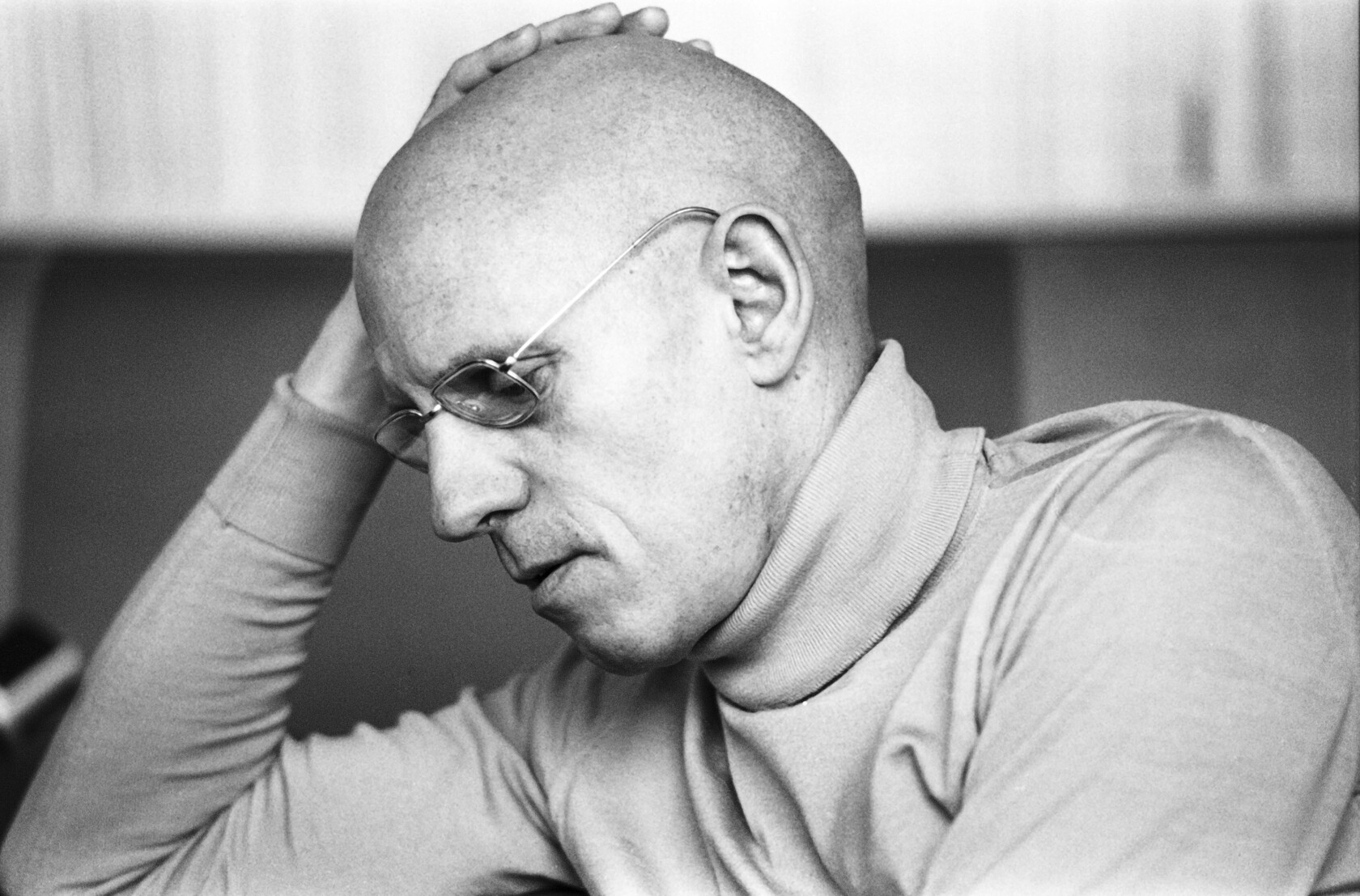
In a plenary discussion about Foucault’s Docile Bodies, Dr. Bory said “Is the doing ever done?” Throughout Docile Bodies, Foucault highlights the difference between humans using time and exhausting time. He describes using time as being efficient, but exhausting time as maximizing productivity. Dr. Bory’s stated later during plenary that our bodies can forever be improved. We can always be more efficient and more productive, but the accomplishments are never done. There is no end to efficiency. This is crucial to understanding discipline constrained by time.
2) Legal Argument
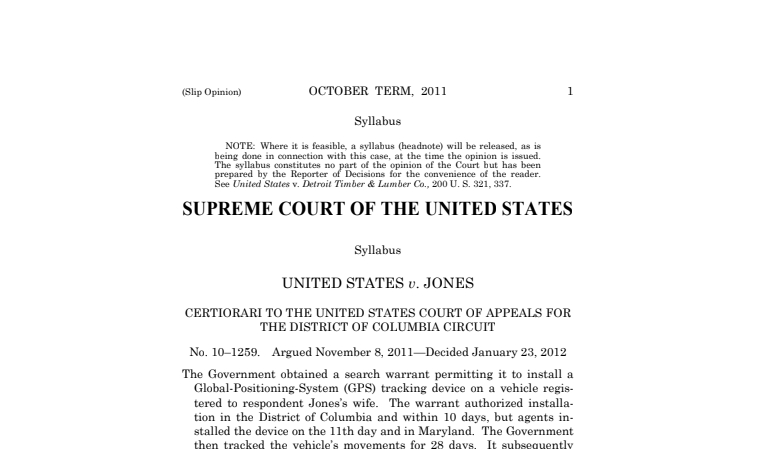
United States v. Jones illustrates the complexity of privacy. During Dr. Lipsker’s section discussion on the readings, we shifted our conversation to the question “should we expect privacy?” In US v. Jones, we see that expectations of privacy do not guarantee privacy. Jones did not anticipate that he was being monitored. If we do not know if we are experiencing privacy at a given time, how can we ever know if we are really experiencing privacy?
3) Historical Analysis/Documentation
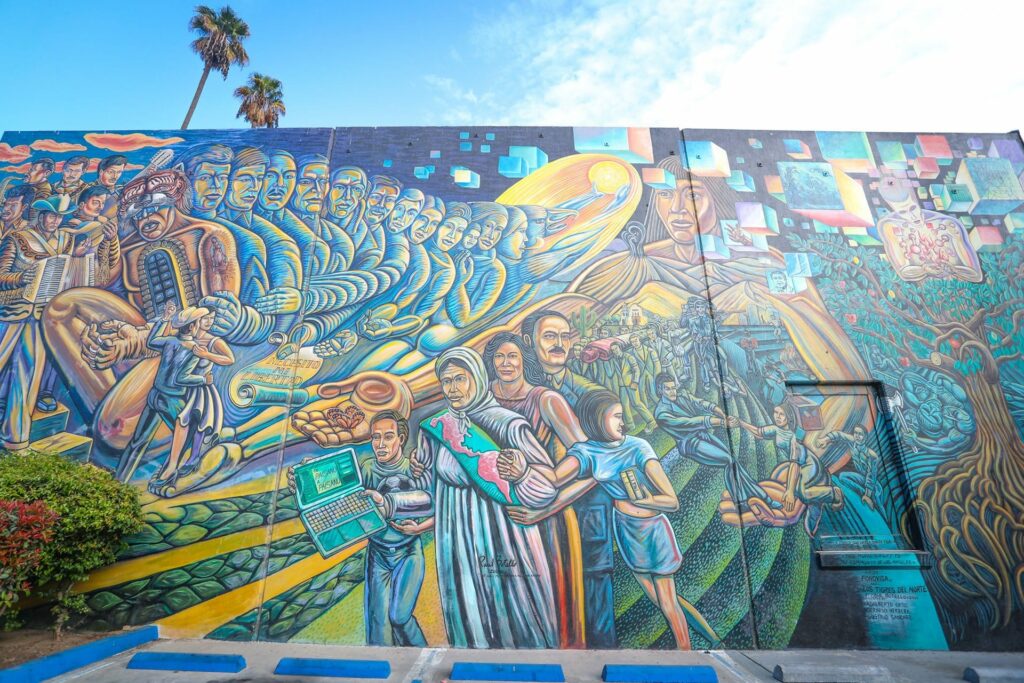
Allen Compton from SALT Landscape Architects served as one of the “Creative Placemaking as Cultural Justice” panelists. His presentation addressed his teams’ efforts to reimagine Ruben Salazar Park. His work seeks to tell the stories of communities through physical space. Compton redesigned Ruban Salazar Park to center a commissioned mural embodying the experience of the California Chicano Movement and protests. During the National Chicano Moratorium March, Mexican reporter Ruben Salazar was shot and killed by a Sherrif’s deputy. Compton designed timeline signs that highlight the events that led up to, and followed, Salazar’s death.
4) Non-Textual Visual Artifact
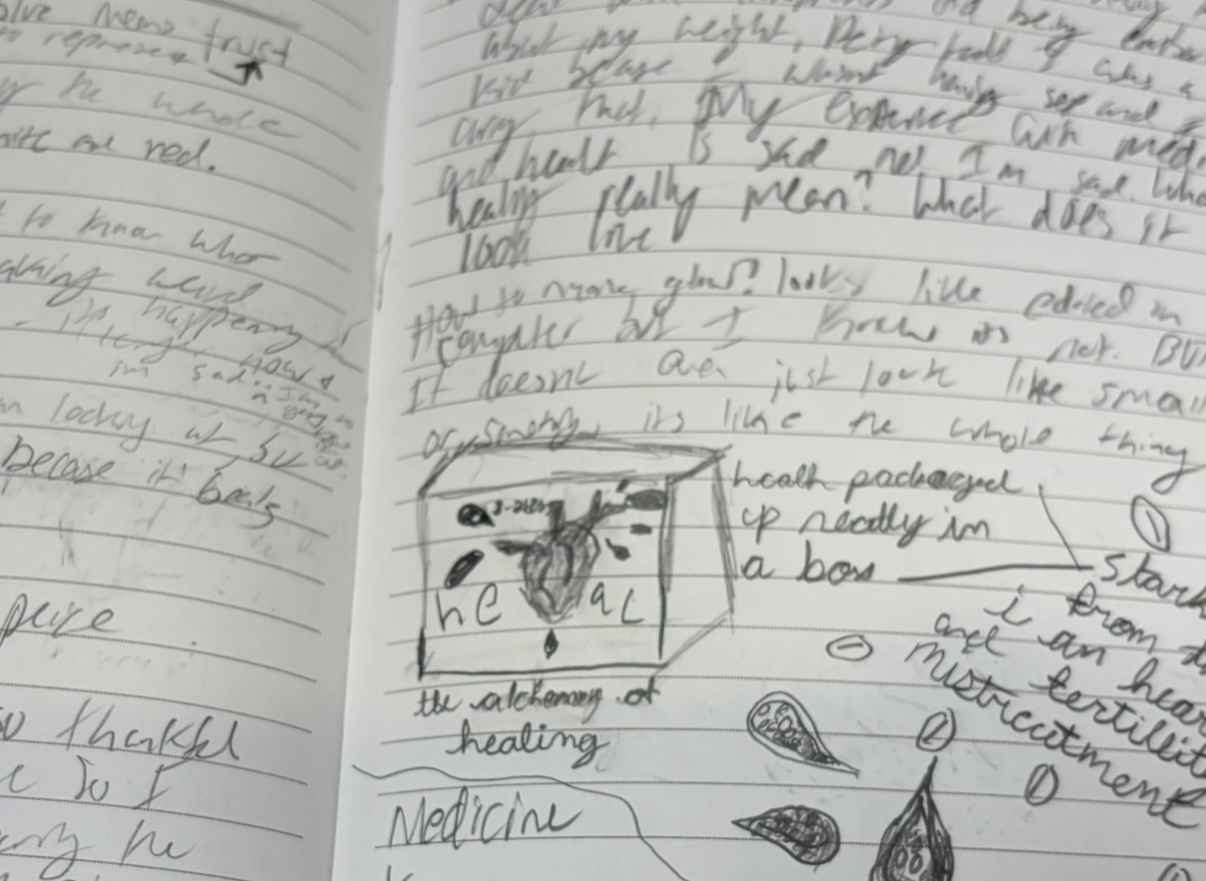
Dr. Corso-Esquival challenged the Humes course to sit and stare at one singular piece of artwork for 50 minutes without any form of stimulation besides a piece of paper and a pencil to take notes. My first few notes focused on the composition of the artwork. I wrote down “I see blue. We talked in section about how blue means trust. Insurance companies use blue.” Another one of my notes simply says, “I wish I chose a more stimulating piece.” I felt this way at the beginning, but as I was forced to sit and stare at the same artwork, I found myself enjoying every second. I allowed myself to write slow, and to include any random thoughts without filtering and adjusting them for a specific audience.
5) Performance
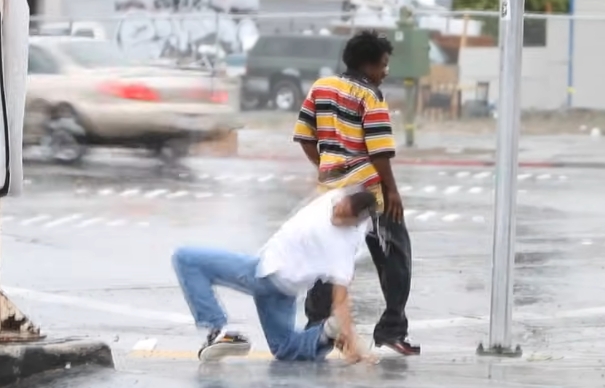
Andre Lepecki’s “Choreopolice and Choreopolitics” analyzes a recording of a performance called ““TURF FEINZ RIP RichD Dancing in the Rain Oakland Street.” Before the dancers begin to move, they are faced with a patrol car driving by slowly. This immediately inserts the condition of surveillance that the dancers are under. The performance takes place on a public sidewalk, which challenges the social order “intent” of the infrastructure. Lepecki uses this performance to highlight the constraints, some visible and others unseen, that prohibit bodies from moving freely.
Works Cited
Calderon, Sarah, and Erik Takeshita. “A future of creative placemaking.” The Routledge Handbook of Placemaking. Routledge, 2020. 38-44.
Fig. 1, Michel Foucault in 1977 Roland Allard, Agence VU, Redux
Foucault, Michel. Docile Bodies. 1977.
Lepecki, André. “Choreopolice and Choreopolitics: or, the task of the dancer.” The Performance Studies Reader. 322-334.
“Los Angeles County – Parks & Recreation.” Los Angeles County – Parks & Recreation, Parks & Recreation, 11 Mar. 2025, parks.lacounty.gov/ruben-f-salazar-park/.
“TURF FEINZ RIP RichD Dancing in the Rain Oakland Street,” 2009.
