Permanently Yesterday and Tomorrow
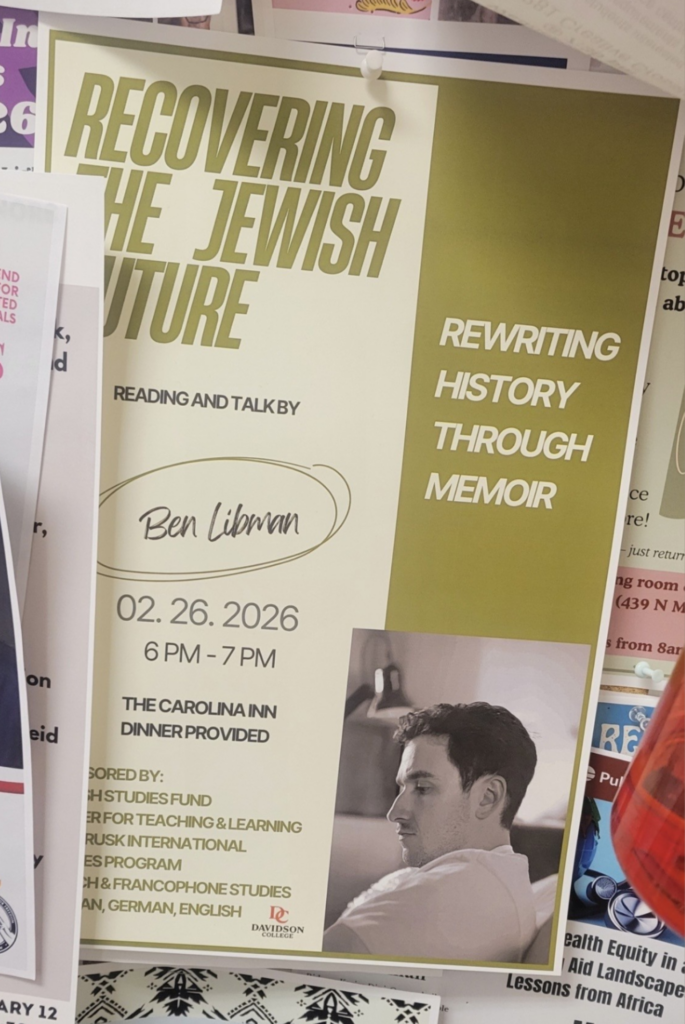
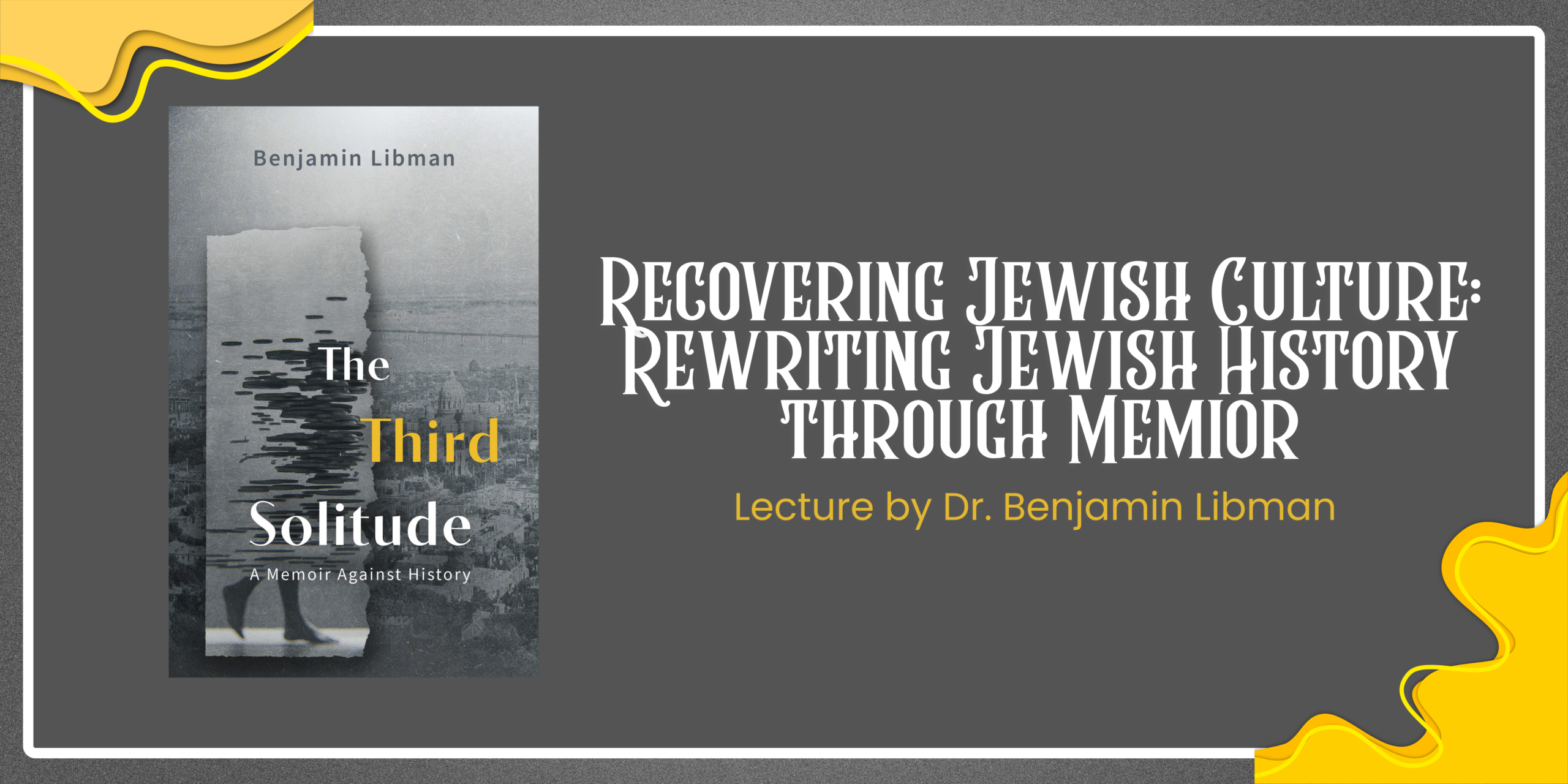
In the present day and future, we only have remnants of the past. Infrastructure, prejudice, and memorials serve as reminders of history, but can never replicate a moment. On February 26, 2026, Davidson College hosted Dr. Benjamin Libman and his event titled “Recovering the Jewish Culture: Rewriting Jewish History through Memoir.” Dr. Libman is an author, translator, and philanthropic literary critic. During this event, he read from his book, The Third Solitude: A Memoir Against History, which describes his encounters with the past, prejudice, and personhood and how each shaped his understanding of commemoration. Through his reading and lecture, Dr. Libman confronted the ideas of community, performance, and nostalgia, and the conflicting roles they assume, in his encounter with memorialization efforts of the Holocaust.
During the book reading Dr. Libman focused on a chapter of that illustrated his experience as one of thousands of Jewish students from across the world participating in “The March of the Living.” “The March” brings Jewish students to different locations across Poland and Israel, intending for them to study history and see the roots of prejudice. Dr. Libman described his experience as sobering as he tripped over stolpersteine, felt the heat of the sun on his body at Auschwitz, and encountered other Holocaust memorials. He shared that he often got very emotional at these experiences, sometimes feeling like he was part of a performance or an allegory. Dr. Libman compared his experience to standing in the past where his “feet were not touching the ground.”
Dr. Libman shared that when “The March” visited Poland, he and his peers were directed to not engage with any locals, assuming they were descendants of Nazi and shared many of the same mindsets. Dr. Libman described this experience as being directed to imagine themselves in a hostile environment, where they were not visiting 2012 Poland, and were instead taking walks through wartime Poland. March participants “we were not in Poland, but the Poland that fit our narrative.” This directed tension, combined with his feeling of performance and allegory, is where Dr. Libman felt disconnected from “The March” and memorialization as such. He stated that these memorialization efforts show the past is something society wants to keep alive, even if it is something we do not want to live with, and that when we try to keep the past alive, it comes back uncanny like a zombie of doppelganger. Even if the past comes again, it never comes in the same way or form.
After reading this chapter of his book, Dr. Libman described his challenges with writing the book and conceptualizing how he felt about his own experiences. He shared struggles with trying to balance his Jewish culture, and the strong family and community connections related to it. Many of his connections did not agree with his book, sharing that many of his connections actually wanted to harm him because of its contents. The book’s ideas about “The March” and its memorialization efforts did not align with the views of many in his community.
When writing The Third Solitude: A Memoir Against History, Dr. Libman had to contemplate the costs of sharing his experiences and maintaining his relationships. He began writing his book in early 2020, then October 7th happened. He felt that this event caused his book to cause even more disconnect from his community and family but simultaneously made it more important that he followed through. Dr. Libman’s final message was a quote from his brother, which stated “The Holocaust is permanently yesterday and tomorrow.” The past exists in everything today and it will continue to revisit. Memorialization is crucial, but how we choose to memorialize shapes how the past revisits us.
