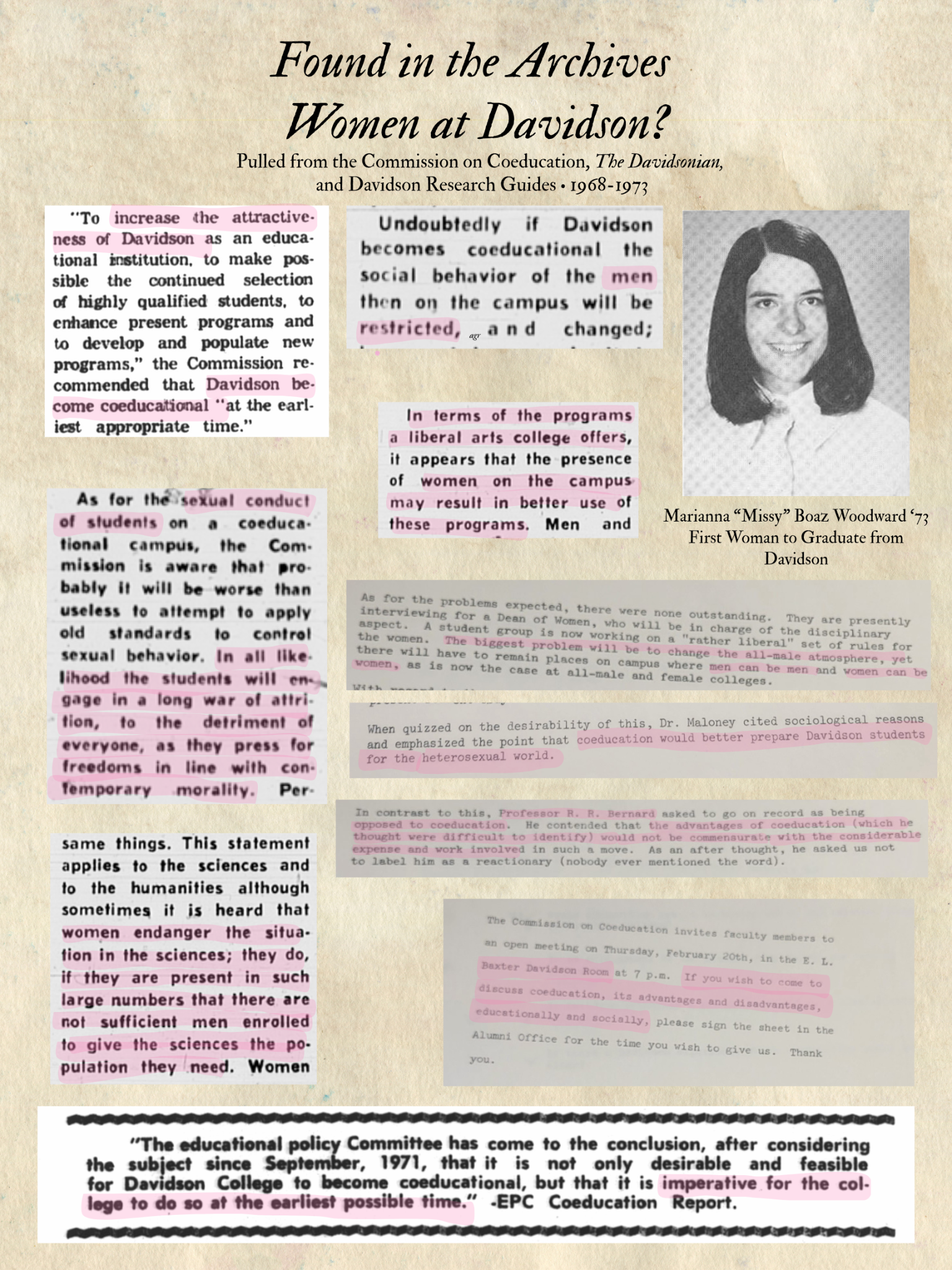
This collaborative project focuses on exploring what it is like to be a woman at Davidson College today. We invited female students from Davidson to answer one question:
“How do you feel about being a woman at Davidson College, today?”
Gaby’s Portfolio Theme
Justice may exist as a whole in principle, but once it is put into practice, it becomes shaped by law, history, language, power, and other systems that determine how it is understood. What we actually experience is not the full idea of justice, but the version that survives those structures.
My Portfolio Theme
Who do we allow to take up space? Whose voices are heard, and whose remain pushed beneath the surface? Carl Sagan’s idea that “the stars are other suns” reflects how I now think about justice: what may seem distant or minor from one perspective can be central from another.
- This project brings together two closely connected ways of thinking about justice. While one perspective asks who is allowed to take up space and whose voices are heard, the other examines how systems shape what justice actually looks like in practice. Together, these ideas complement each other: if justice is filtered through structures like power and history, then it also determines whose experiences are recognized and whose are overlooked. By collaborating, we are able to connect the abstract idea of justice with lived experience, showing how institutional frameworks and personal voices intersect, and why creating space for those voices is essential to understanding justice more fully.
- The objective of our interviews was to create a space for honest reflection and conversation about what it feels like to be a woman at Davidson College today. Our goal was to center the voices of female students and create an open space for their opinions, experiences, and perspectives.
- The interviews took place in the Baxter Davidson Room because of its historical significance, since it’s a space where conversations once took place about the college becoming coeducational from 1968-1973. Holding the interviews here helps connect those past discussions about gender and inclusion with present-day experiences and perspectives.