1) Scholarly Argument
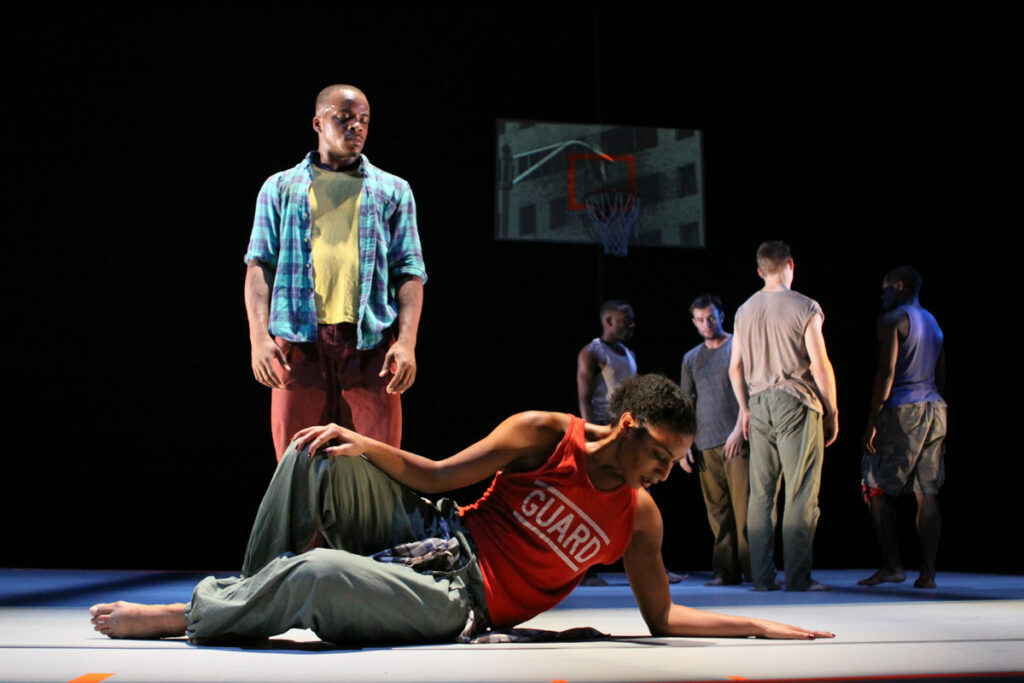
In the case of Prigg v. Pennsylvania it states “Before the adoption of the Constitution, no state had any power whatsoever over the subject, except within its own territorial limits, and could not bind the sovereignty or the legislation of other states. Whenever the right was acknowledged or the duty enforced in any state, it was as a matter of comity and favour, and not as a matter of strict moral, political, or international obligation or duty” (6). The Constitution played a significant role in Prigg V. Pennsylvania, specifically in allowing the access of states into other territorial limits. The inclusion of “comity” and “favor” before the incorporation of the Constitution shows the motivation and justification of natural right in influencing the outcomes of this case.
2) Philosophical Premise
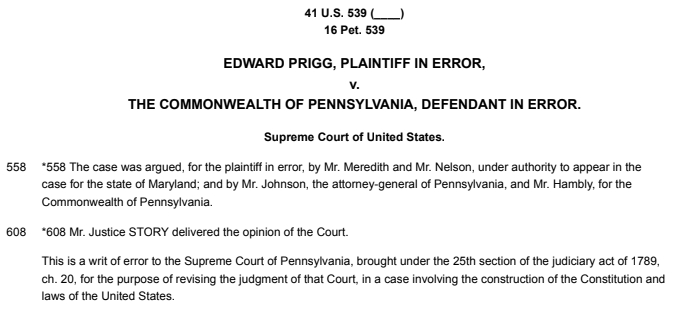
In John Locke’s “Second Treaties of Government” he states that “Civil Governments are the proper Remedy for the Inconveniences of the State of Nature” but then warns us “to remember that Absolute Monarchs are but Men” (276). The state of nature leads to chaos because of our strongest desire for self-preservation. Because of this self-presentation we act as self-executioners of our judgment. If everyone is acting upon their self-execution of government, then the state of nature threatens self-preservation. This is why joining a civil society is appealing, but it’s important to not become too comfortable in order to allow a self-interested person to take over the civil government and create tyranny. Under tyranny, you are unable to practice self-preservation fully.
Image from John Locke – Biography, Beliefs & Philosophy | HISTORY
3) Poetic Response
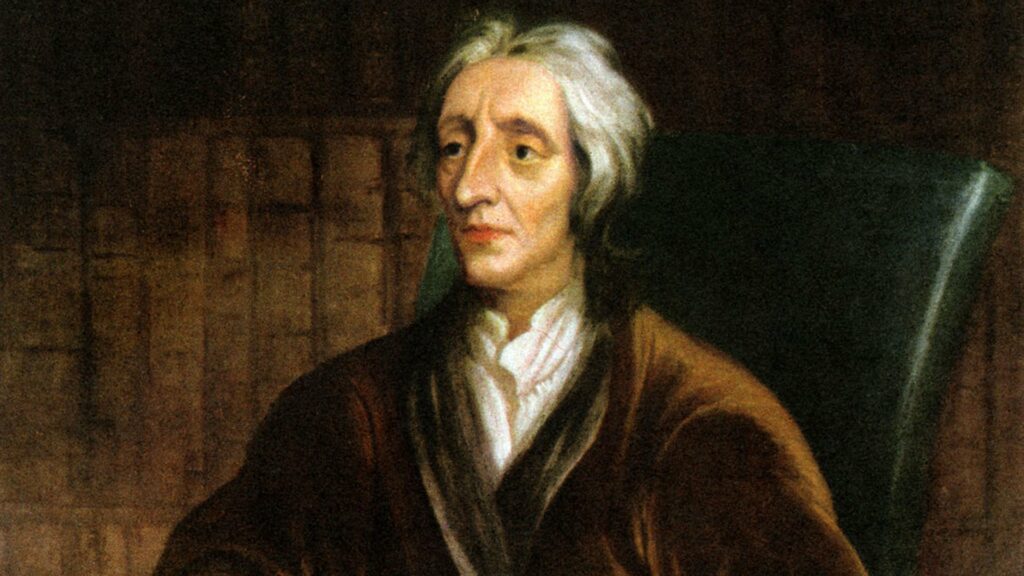
In Canto X of “Inferno” Dante states “with the bodies they have left above at their demise, the tombs will all be sealed eternally. Here in this section Epicurus lies” (lines 11-13). The footnotes state that Epicurus defined the greatest good as pleasure and that pleasure is freedom from pain and anxiety, which is “only achieved through virtue, temperance, and harmony of the mind and body” (111). Epicurus defines freedom from pain and anxiety as the greatest good. This connects to the idea presented in Betham’s utilitarianism where he states that society’s goal should be to provide the least amount of suffering and most happiness to the largest number of people (14).
4) Historical Analysis/ Documentation
Ying Zhu’s “Moving Bodies Moving Architecture: Structural Fluidity and Pedestrian Choreographies at the Vietnam Veterans Memorial” states that “as much as the architecture provokes responses to the trauma of the Vietnam War, it also compels a literal moving of the body in the process of prompting these responses.The
memorial not only affects visitors on the level of the emotive, but it also affects them to move—into literal motion—choreographing a physicality, a set of moves and actions” (324). The personification of the Vietnam Veterans Memorial creates a larger impact on those reading about the memorial, who are unable to physically be in its space. It is not possible for a memorial to actually create choreography through words, but by implying that its actions choreograph viewers, the architecture is strong even without being seen.
Image from Visiting the Vietnam Veterans Memorial in Washington, DC | Washington DC

5) Non-Textual Reflection
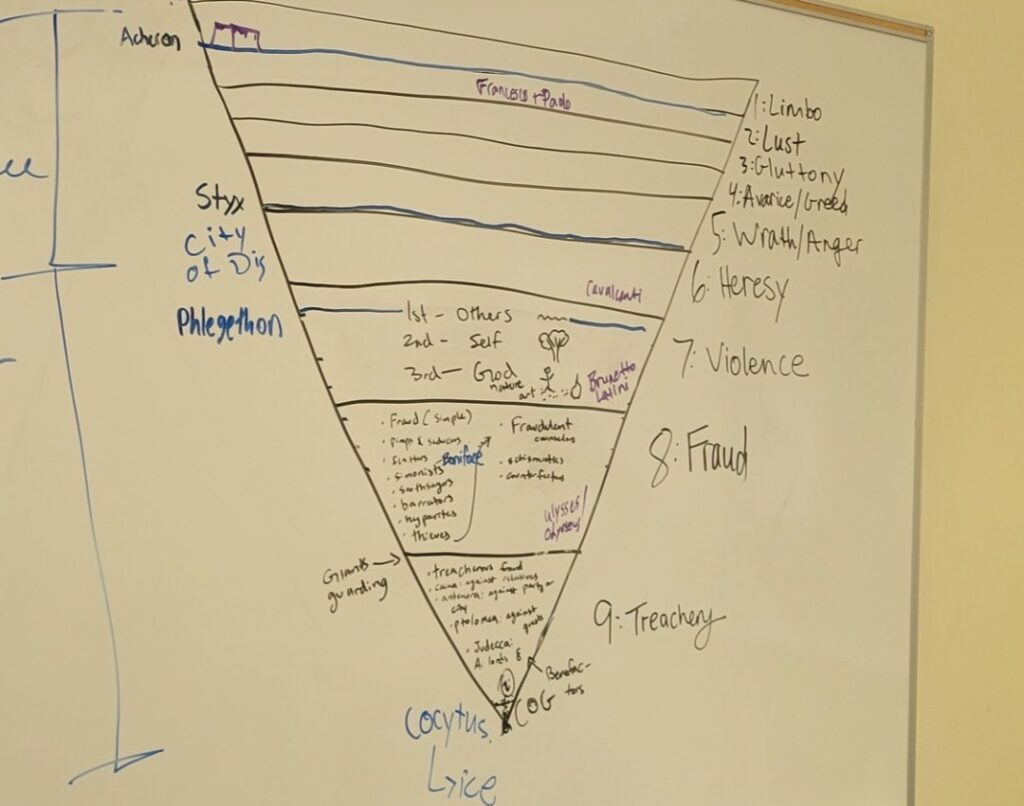
Kyle Abraham’s “PAVEMENT” silently showed the struggles women face in society. In the midst of advocating for the “black experience” there was only one woman showcased throughout the entire recording of the performance. The woman was repeatedly a “side” character in the stories of men, but never showcased on her own. This is reflective of how women, especially colored women, lack representation. At the very end of the performance, each male dancer is seen lying on top of each other making a stack while the woman lies alone. This is representative of the isolation women are faced with in society, and the lack of support systems that women must make up for on their own.
Image from Kyle Abraham / Abraham.In.Motion – Pavement – London – DanceTabs